
20 Years Gerhard Richter Archive. Works, Materials, Curiosities at the Albertinum in Dresden
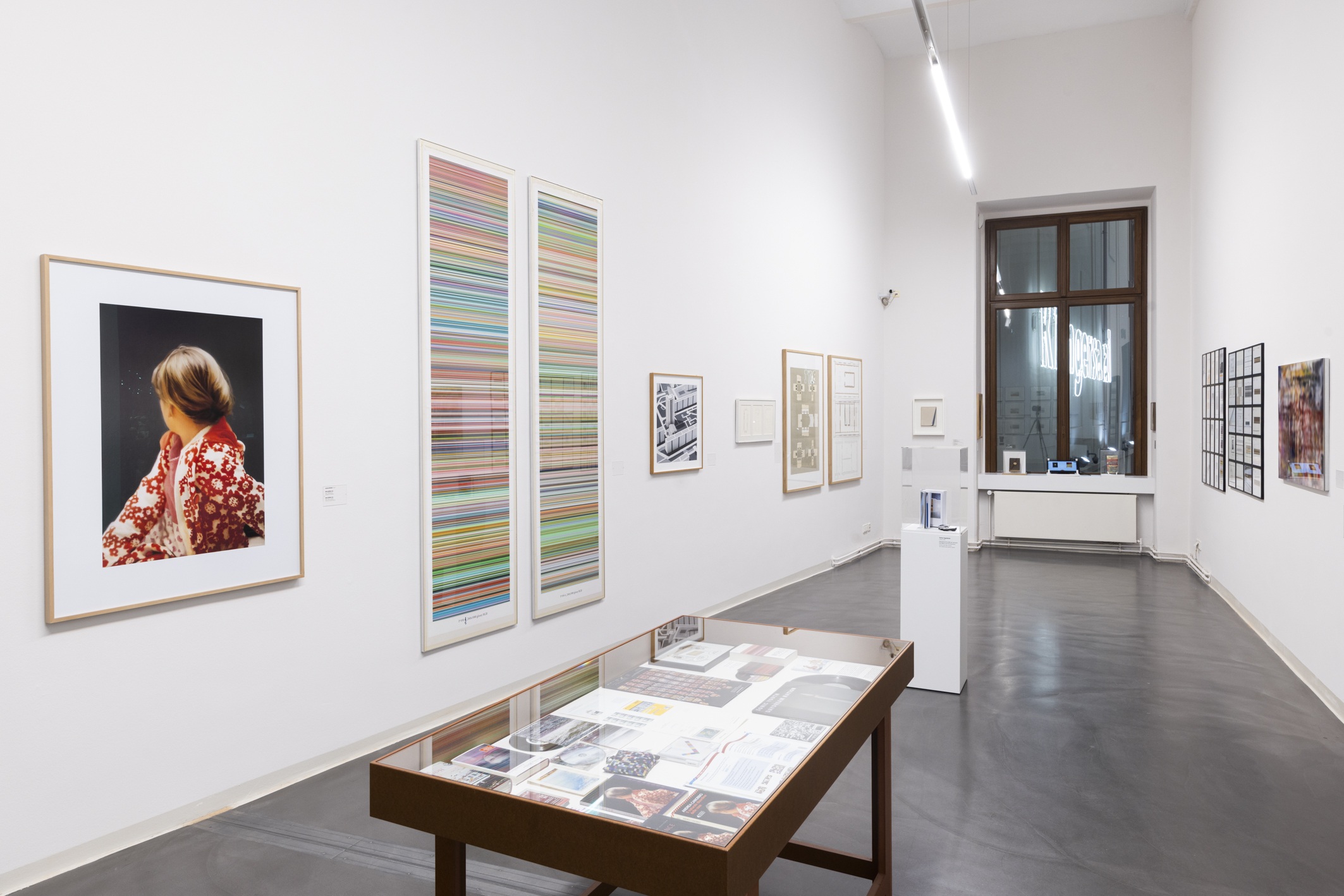
15. December 2025The cabinet exhibition “20 Years of the Gerhard Richter Archive: Works, Materials, Curiosa” at the Albertinum in Dresden provides an insight into the workings of the archive, which has been directed by Dr Dietmar Elger since its founding in February 2006. Despite its intimate scale, the exhibition surprises with an extraordinary density of discoveries—a testament to the thoughtful curation that blends a deep passion for Richter’s work with the archive’s meticulous collecting enthusiasm.
The presentation skilfully interweaves multiple layers of meaning, allowing objects to engage in a lively dialogue across categories: high art alongside mass-media echoes, sketches beside photographs. Visitors are encouraged to uncover connections independently, free from intrusive explanations.
At the surface level, we encounter works such as Umgeschlagenes Blatt (1965), editions like the six-part Kanarische Landschaften I and II (1971) and Betty (1991), as well as sketches and room models that reveal Richter for the first time as the curator of his own exhibitions. Among them is a model of the Albertinum incorporating the representation of the Richter rooms that he himself designed—a delightfully self-referential highlight that mirrors, in miniature, the very space in which one stands, pushing the exhibition’s meta-level to its peak.
Deeper layers emerge through portrait photographs by Anton Corbijn, Angelika Platen, Alice Springs and Benjamin Katz, offering an intimate glimpse of the artist, often in studio settings.
Especially surprising are the curiosa: rarely or never-before-shown objects that demonstrate how profoundly Richter’s art has permeated everyday life—from the Obelisco (1992) porcelain service and a carpet based on the pattern 1024 Farben (1988), to record sleeves for bands such as Sonic Youth, Pet Shop Boys and Die Toten Hosen, along with numerous book covers featuring his motifs.
The exhibition displays only a tiny fraction of the treasures preserved in the Gerhard Richter Archive. Beyond a small number of paintings, 47 editions and all the artist’s books, the collection includes around 6,000 publications, 2,400 invitation cards and leaflets, nearly 500 posters, and vast quantities of press reports. In addition to supporting exhibitions and research projects at other institutions, the archive pursues its own initiatives: the continuous development and updating of the catalogue raisonné of paintings and sculptures, alongside the production of its own publications and exhibitions.
Shaped with evident care by those who have devoted two decades to gathering everything related to Gerhard Richter’s life and work, the exhibition deliberately avoids spectacle. Instead, it fosters a quiet yet lasting resonance—a poignant reminder of how great art endures, subtly shaping the world in often unnoticed ways long after leaving the studio.
The exhibition is on view in Dresden until 12 April 2026 (note that the Albertinum is closed from 19 January to 6 February 2026).